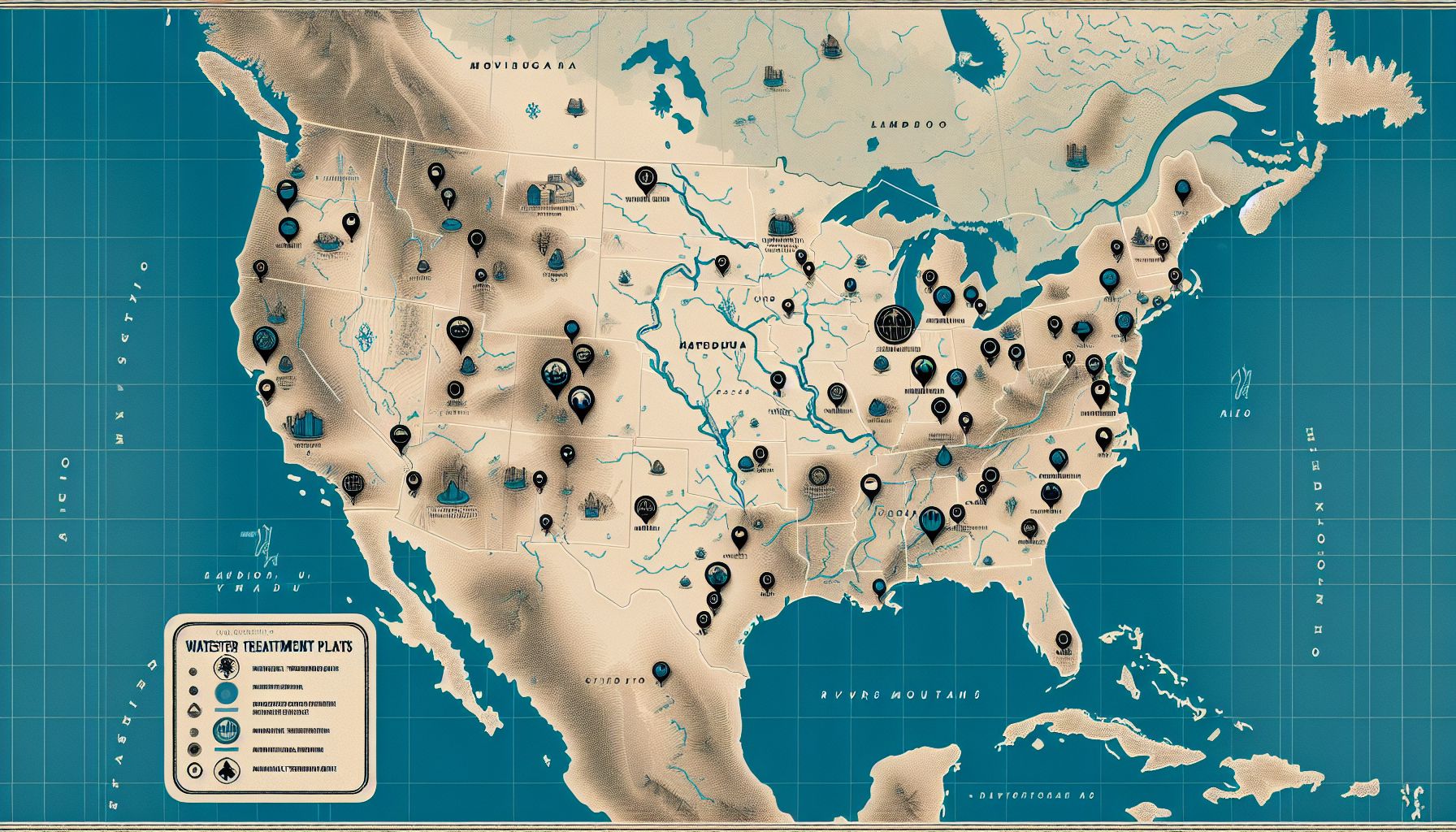
Municipal wastewater treatment plant locations nationwide
In ensuring sustainable living conditions, the importance of an effective wastewater management system is often undervalued. Municipal wastewater treatment plants play a key role within this system by effectively processing raw sewage to remove contaminants and produce water safe for reintroduction into the environment. But have you ever wondered where these critical facilities are located across America?
Geographic Distribution of Wastewater Treatment Plants
The United States is home to over 14,748 municipal wastewater treatment facilities according to the most recent statistics from the Environmental Protection Agency (EPA). These facilities are prevalent across the nation, serving to treat water in both urban and rural communities alike. The positioning of these treatment plants factor in a number of considerations ranging from population density to topographical information and regional health codes.
The northeastern states such as New York, Pennsylvania, and New Jersey host a higher concentration of these facilities due, in large part, to their densely populated urban centers. On the other hand, western states like Texas and California, given their extensive land area and substantial population, also house a significant number of these facilities.
In the more rural states like Montana and Wyoming, the facilities might be relatively fewer but play just as vital a role in managing the region’s wastewater needs. Smaller, decentralized treatment plants often service these rural areas allowing for more flexible and cost-effective treatment solutions. Newer technology advancements have also made it possible to operate these facilities more sustainably.
Interestingly, you can find wastewater treatment facilities nationwide through an interactive online map. Here, each plant’s location is clearly marked, offering insights into the vast distribution network of these crucial installations. Not only is it fascinating from an informational perspective, but this tool also helps policymakers and researchers assess crucial data related to the nations’ wastewater management capacity.
Factors influencing the Location of Wastewater Treatment Plants
While it might seem arbitrary to some, the siting of a wastewater treatment plant is a complex process influenced by a combination of geographical, socio-economic, and environmental factors. Proximity to residential areas is of great importance, as is the lay of the land, groundwater resources, and proximity to bodies of water that serve as discharge points post-treatment.
The design and operational requirements of a wastewater treatment plant also significantly influence its location. Key aspects to consider include land availability for infrastructure, access to power and utilities, ease of access for maintenance and service, among others. Let’s not forget the impact on the local community, which often has regulations outlining the distance a facility must be from residential areas to minimize potential odor issues or improve aesthetics.
A Brief Look at the Largest Municipal Wastewater Treatment Facilities
For a better understanding of municipal wastewater treatment plants, let’s consider a few large-scale facilities. The Stickney Water Reclamation Plant in Chicago, Illinois, covers a massive 413 acres and serves a population of 2.3 million people. It stands as the largest wastewater treatment plant in the world in terms of volume, processing up to 1.44 billion gallons of wastewater daily.
On the west coast, the Hyperion Sewage Treatment Plant in Los Angeles treats an estimated 330 million gallons per day, serving a population of about 4 million people. This plant, initially built in 1894 and upgraded multiple times since, showcases the evolution of wastewater management in response to growing populations and advancing technologies.
The Future of Wastewater Treatment Plant Locations
As we look towards the future, the positioning of wastewater treatment plants nationwide will continue to evolve with changes in population distribution, emerging technologies, and shifting environmental policies. Concepts like sewerage-free cities, ecological sanitation systems, and wastewater recycling for urban agriculture are slowly being tested and may become part of our wastewater management norm in the future.
Moreover, considerations for climate change and rising sea levels may also influence the siting of new facilities. A 2019 study published in the journal “Nature Climate Change” suggested that 37% of all facilities in the United States might be affected by the sea-level rise by 2100. If this proves accurate, we can potentially see a shift in plant locations further inland.
Conclusion
Municipal wastewater treatment plants are distributed extensively across our nation, each providing an essential service for its communities. The location of these facilities is an intricate, expertly planned directive balancing population needs, technical requirements, and potential environmental impacts. As our cities grow, so does our comprehensive understanding of this integral sector. So, the next time you drive past a wastewater treatment facility, take a moment to appreciate its role in curating a cleaner, healthier environment.
Comments are Disabled