
How to clean a water softener brine tank
Having a water softener in your household can be a boon – removing excess minerals from your water supply, delivering cleaner dishes, softer clothes, and less limescale buildup. Yet, in order to reap these benefits optimally, regular maintenance, particularly of the brine tank, is essential. The ignored build-up of salt, iron, and other impurities can cause malfunction. Good news is, cleaning a water softener brine tank is neither complicated nor time-consuming and can significantly enhance the appliance’s lifespan. It also improves performance, ensuring you get the best quality softened water for your needs.
Understanding Your Brine Tank
Before starting the cleaning process, it’s essential to have a basic understanding of how the brine tank functions in your water softener system. The brine tank holds a salt solution, which is crucial for recharging the resin beads that play a key role in softening your water. Over time, salt bridges or mushing can occur due to the accumulation of impurities – both conditions disrupting the softening process.
Ensuring the efficient functioning of the brine tank, therefore, is a core aspect of water softener maintenance. Regularly checking the area can help identify any problems early and maintain the quality of your softened water.
Determining the Frequency of Cleaning
How frequently should you clean your brine tank, you ask? Well, it depends on several factors. Most manufacturers recommend annual cleanings, but the time may vary based on your device’s model and your water hardness levels. If your water contains high levels of iron or if you use rock salt instead of evaporated salt pellets, your tank may need more frequent cleanings – perhaps every six months.
Assembling Your Cleaning Tools
The cleaning process doesn’t require any fancy tools. A long-handled brush, a shop vacuum, some rubber gloves, a garden hose, and regular dish soap or a water softener cleaner designed specifically for salt tanks should do the trick.
Step-by-step Cleaning Process
Ready to roll up your sleeves yet? Let’s dive right into the process with these step-by-step instructions.
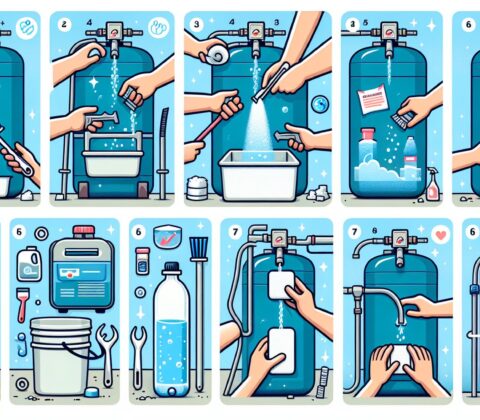
Step 1: Disconnect and Drain the Brine Tank
Firstly, disconnect the brine tank from the rest of the water softener system. It’s important to refer to your manufacturer’s manual to understand how to safely perform this step. Next, begin draining the water from the brine tank. You can use a shop vacuum to remove any remaining liquid. This process will expose the salt at the bottom, be it in the form of a bridge, mush, or normal salt stockpile.
Step 2: Remove the Salt
Remove as much of the remaining salt as you can. If there’s a salt bridge or mushing, break it apart with a broom handle or similar tool and scoop it out. Also, be sure to remove any other visible impurities.
Step 3: Scour the Tank
After emptying the tank, create a soapy water mixture using warm water and dish soap. Scrub the interior of the tank with this solution and your long-handled brush. Pay special attention to corners and lower sections of the tank where salt residue may have accumulated.
Step 4: Rinse Thoroughly
Rinse the tank thoroughly with clean water using a garden hose. Repeat the scrubbing and rinsing process if you still notice any residue or stains in the tank.
Step 5: Sanitize the Tank
For deeper cleaning, consider using a water softener cleaner. Pour it into the tank and scrub again. Once more, rinse thoroughly until all the cleaner is removed.
Step 6: Reconnect and Refill
After the cleaning process, reconnect the brine tank to the water softener system. Then, refill the tank with salt. Filling the tank half to three-quarters full is typically recommended, but this may differ depending on your device’s manufacturer instructions.
In order to ensure the system recharges properly, it is advisable to manually regenerate the water softener once cleaning is done.
Wrapping It Up
Cleaning your water softener brine tank is an important part of maintaining the efficiency and lifespan of your appliance. By following the steps outlined above and scheduling regular cleanings, you can ensure your water stays soft and your softener keeps functioning without a hitch.
Do remember, this is a general guide and water softener models can vary – it’s always wise to consult your manufacturer’s instructions for specifics. With consistent upkeep, you can maximize the benefits of having that high-performing water softener in your home.
An ounce of prevention, they always say, is worth a pound of cure. Or, in water softener parlance, a little regular cleaning is worth bountiful of softened water!
Comments are Disabled