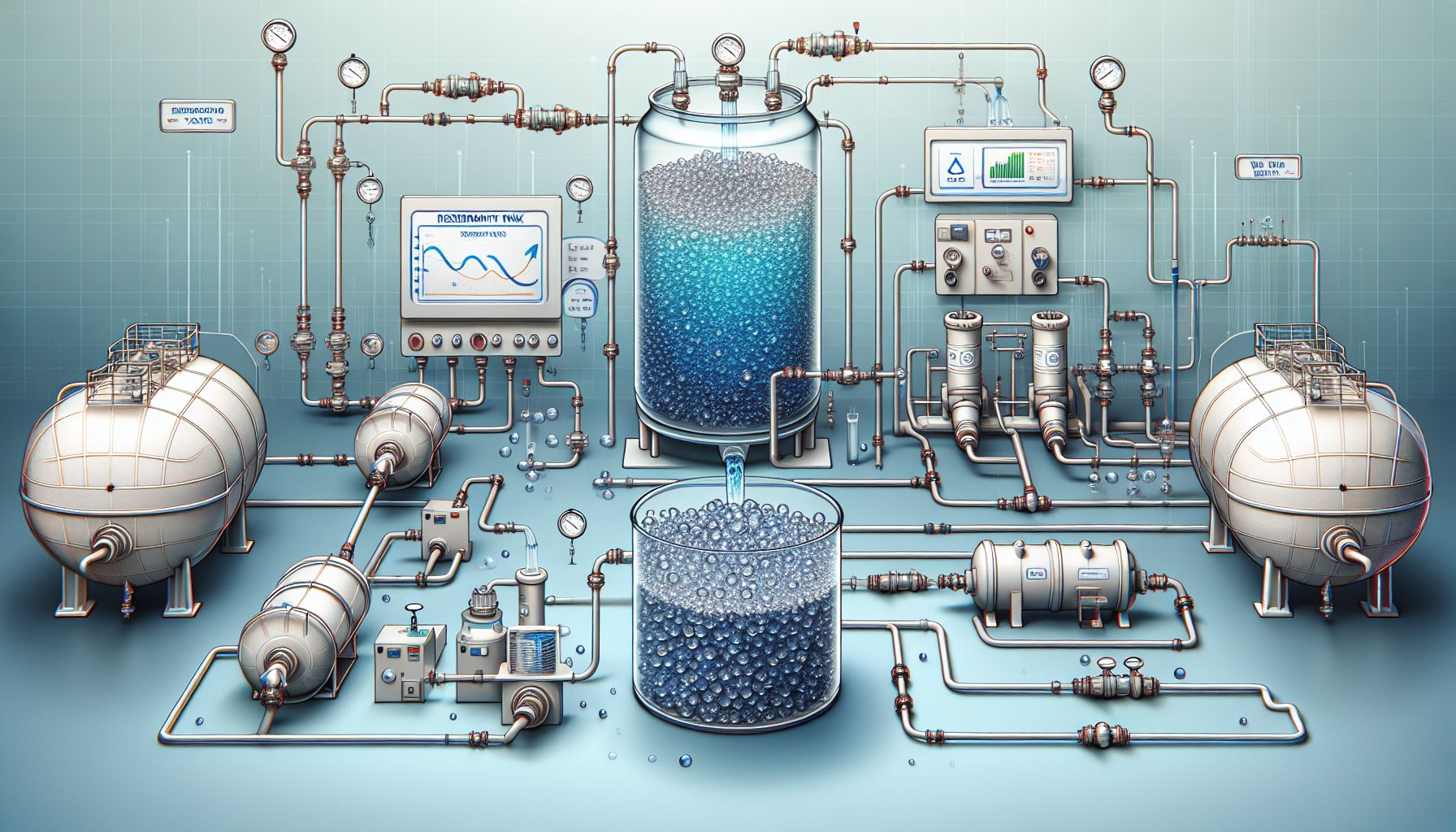
Ion exchange resin regeneration and system optimization
In the complex world of water treatment, ion exchange resin occupies a critical role. Its problem-solving prowess can be seen in contexts ranging from water softening and purification, to the extraction of valuable minerals. Yet, to fully harness this technology’s potential, understanding the regeneration process and system optimization becomes indispensable. This article aims to shed light on these aspects, exploring technicalities and presenting practical insights drawn from real-world examples.
Unraveling Ion Exchange Resin Regeneration
Ion exchange resin regeneration is a process specifically meant to restore the resin’s initial ion-exchange capacity, extending its lifespan and reinforcing its efficiency. It’s a cost-effective alternative to premature resin replacement—provided it’s done correctly.
Typically, the regeneration process involves three distinct stages: backwashing, chemical regeneration, and rinsing. During backwashing, water flows through the resin bed in a reverse direction to remove any trapped particulates. Next, a regenerant chemical solution—often an acid or base—is introduced to re-plenish the resin beads’ ionic capacity. Finally, the coils are rinsed off any lingering regenerant solution, preparing the resin for a fresh cycle of ion exchange.
While the process may sound fairly straightforward, it’s actually steeped in intricate chemical kinetics and equilibrium considerations that necessitate meticulous planning and precise execution.
Delving into System Optimization Techniques
The effectiveness of ion exchange resin regeneration largely hinges on system optimization. Three overarching parameters shape this optimization process—regenerant type, concentration, and contact time.
For starters, the choice of regenerant type must be compatible with the resin’s chemistry. Sodium chloride (NaCl), sulfuric acid (H2SO4), and hydrochloric acid (HCl) are commonly used regenerants. However, one must be wary of their potential environmental impacts, especially in the case of heavy metal-bearing waste streams.
Next, it is important to get the regenerant concentration and contact time just right. Overexposure or underexposure to the regenerant can oversaturate or weaken the resin’s ion-exchange capacity, respectively. Similarly, contact time is a crucial determinant of the regeneration process’s efficiency and cost-effectiveness. Research suggests that optimal resin regeneration often calls for a careful balance of these variables for achieving the desired system efficiency.
The Evaluation of Regeneration Efficiency and Case Example
Regeneration efficiency should be periodically assessed to ensure optimal system operation. Parameters such as regenerated capacity, regenerant dose, effluent quality, and post-regeneration resin characteristics are commonly used as assessment indices.
But how does this play out in practice? Let’s consider an example from the Clemson watershed excellence center. Part of their research involves investigating the ion exchange processes in waste-water treatment. They frequently monitor the characteristics and performance of their ion exchange resins to gauge the efficacy of their regeneration efforts. Such diligent monitoring helps in identifying issues early and making necessary modifications to the regeneration process.
Fine-tuning Regeneration for Environmental Sustainability
Beyond efficiency, there’s an increasing emphasis on environmentally friendly practices in water treatment. It’s understood that dumping high-concentrated waste regenerant solutions can lead to the contamination of water bodies. The challenge lies in balancing process efficiency with environmental responsibility.
One proven strategy is to minimize unnecessary regenerant discharge. Practices like regenerant recovery and reuse have been gaining traction as a result. The application of advanced technologies, such as reverse osmosis and spray evaporation, further aid in this task.
Future Trends and Considerations
The future of ion exchange resin regeneration hinges on two key aspects—sustainability and automation. The development of biodegradable resins and eco-friendly regenerants is expected to take the forefront in research efforts. Simultaneously, the integration of automated monitoring and control systems will likely streamline the regeneration process while minimizing human error and intervention.
In summary, Ion exchange resin regeneration is a crucial, yet nuanced aspect of water treatment systems. It demands a systematic understanding of system characteristics, meticulous planning, and careful execution. The combination of proven practices and innovative approaches will continue to guide the path to more efficient and sustainable resin regeneration.
Comments are Disabled